
Honey-glazed salmon has a beautifully caramelized glaze and a tender, flaky interior that will make you want to add it to your weekly dinner rotation. Sweet, sticky, and smoky all from one skillet, in under 30 minutes.
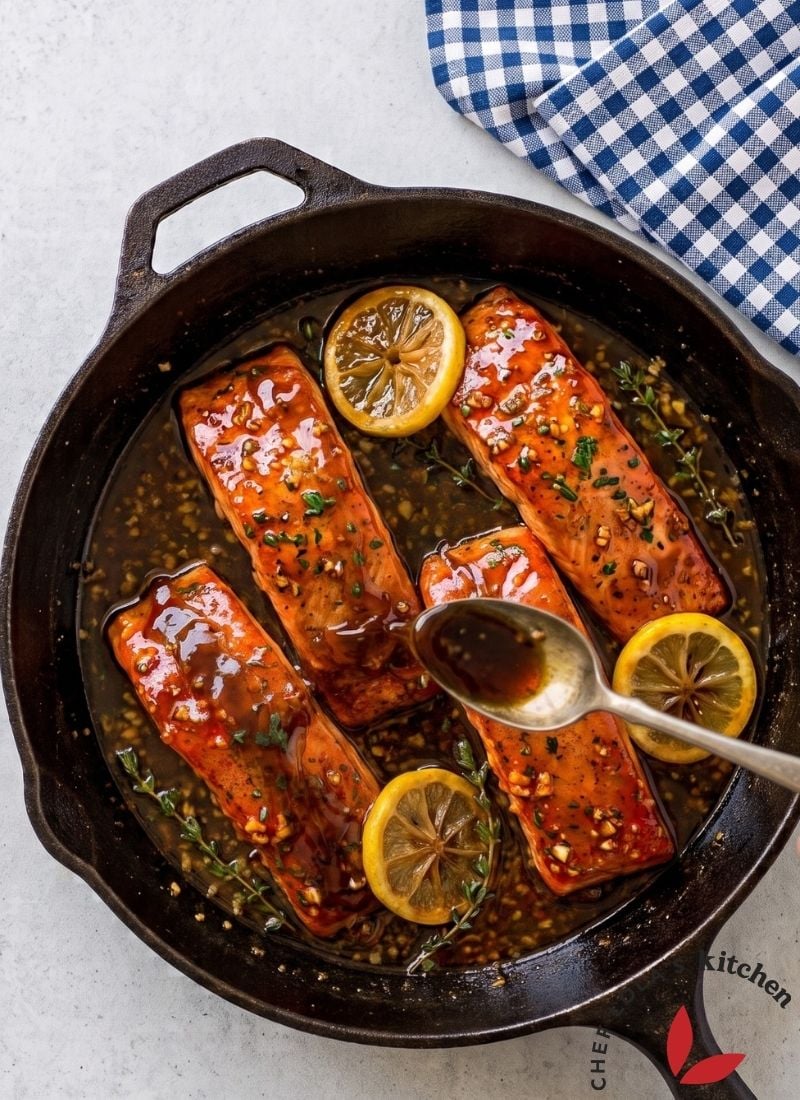
Sweetly Satisfying Honey Glazed Salmon Recipe
Honey-glazed salmon is a quick, easy dish that takes about 25-30 minutes from start to finish. It combines great taste with great texture. It's also one of the most beginner-friendly fish recipes on this site.
There are a lot of salmon recipes out there, but this one earns its place at the top for a few very specific reasons. The glaze is built in layers: honey for sweetness, soy sauce for umami depth, sriracha for heat, lemon juice for brightness, and smoked paprika for that subtle smokiness that ties everything together. Every ingredient does real work here. It's an ideal choice for those who want a dish that's both delicious and easy to make.
Sear the salmon first, build the glaze in the same pan over lower heat, then return the fish and spoon the glaze over it for the last minute or two. That order is the whole recipe. Get it right, and you get a restaurant finish.
If you have been nervous about cooking fish at home, this is the recipe that will change that.
What Makes This Honey Glazed Salmon So Good?
The glaze is perfectly balanced: Sweet from the honey, savory from the soy sauce, tangy from the lemon juice, slightly spicy from the sriracha, and aromatic from the garlic and ginger.
It pairs with almost anything: Serve it over rice, alongside a fresh salad, or next to my Garlic Butter Sautéed Broccoli for a complete, nutritious meal that comes together in the same amount of time it takes to cook the salmon.
One pan, and the fond becomes the sauce: All the browned bits left behind from searing get dissolved straight into the glaze.
It's Nutritious: This dish is not only delicious but also very nutritious. Salmon is a great source of protein, omega-3 fatty acids, vitamins, and minerals that can be beneficial for your health. You can also eat it alone as the main course or pair it with veggies or a salad.
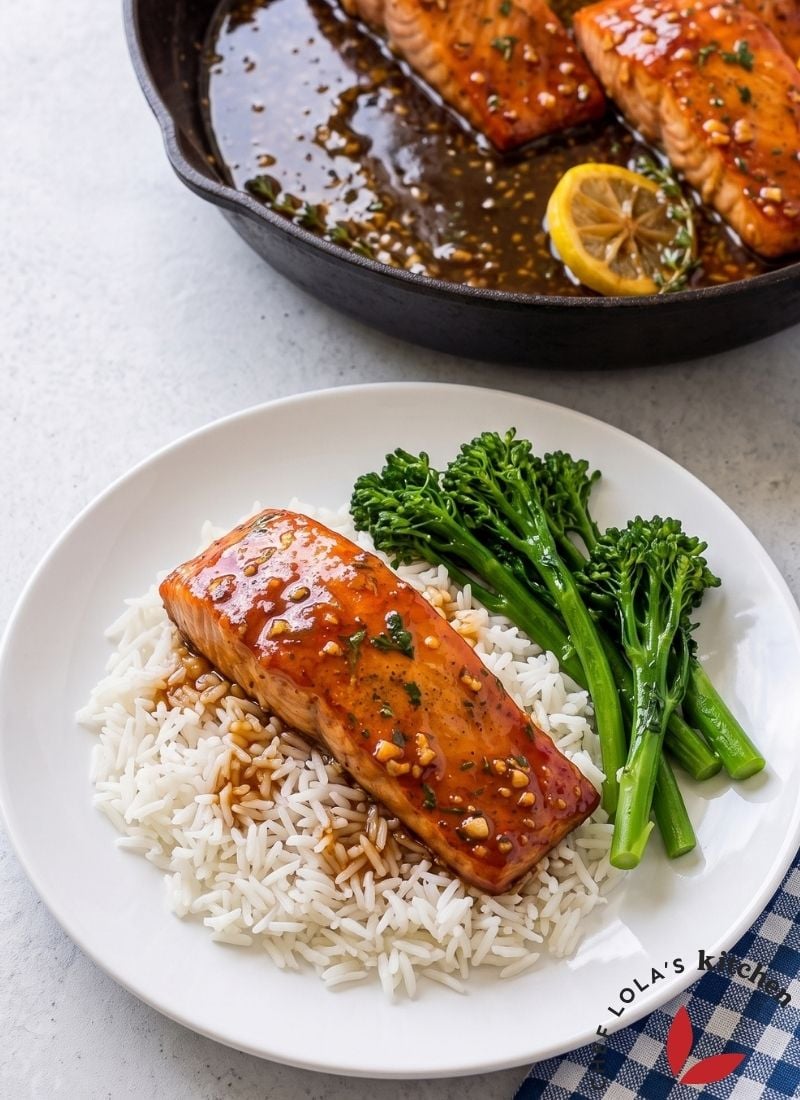
Ingredients You Will Need
- Salmon fillets: skin-on (or skin off if preferred), fresh, and free of discoloration. Fresh salmon gives you the best flavor and texture, though frozen works too if properly thawed. Look for fillets that are roughly the same thickness so they cook evenly.
- Olive oil: Split between searing the fish and building the glaze. A neutral high-heat oil like avocado works too.
- Butter: Added to the pan after searing to build the glaze. It adds richness and helps with the glossy finish.
- Garlic: Two cloves, minced. Add on low heat after the fish comes out so it doesn't burn.
- Fresh ginger: adds a warm, slightly spicy undertone that complements the honey and soy sauce beautifully.
- Smoked paprika: Adds a warm, slightly spicy undertone that complements the honey and soy sauce.
- Onion powder: adds a quiet savory depth to the glaze.
- Low-sodium soy sauce: provides that essential umami and saltiness that balances the sweetness of the honey. Low sodium is recommended so the glaze does not become overly salty as it reduces.
- Lemon juice: brightens the whole glaze and cuts through the richness of the salmon. Do not skip this.
- Sriracha: adds a gentle heat that builds slowly. You are in full control of how much you use depending on your spice preference.
- Honey: the star of the glaze. It caramelizes and creates that sticky, glossy finish the dish is known for.
- Salt and pepper: to taste.
- Lemon wedges and fresh parsley: for garnish and an extra pop of freshness right before serving.
How to Make Honey Glazed Salmon
- Dry the fish: Pat the fillets completely dry with paper towels, including the skin if using. Surface moisture is the single biggest reason home cooks fail to get a sear. Season both sides with salt and pepper and let the fillets sit at room temperature for 5 minutes.
- Heat the pan properly: Set a heavy skillet, cast iron, or stainless steel pan over medium-high heat with 1 tablespoon of the olive oil. Wait until the oil shimmers and moves like water when you tilt the pan. A nonstick pan will work, but it will not build the browned bits that make the glaze taste rich.
- Sear skin side down (if using salmon with skin): Lay the fillets in the pan skin side down, away from you. Press each one gently with a spatula for about 10 seconds so the skin makes full contact instead of curling. Then leave them alone for 4 to 5 minutes. Do not move them or poke them. You will see the flesh turn from translucent to opaque, creeping about two-thirds of the way up the side of the fillet.
- Flip and finish the sear: Turn the fillets and cook 2 to 3 more minutes, depending on thickness. Transfer them to a plate. They will not be fully cooked yet, which is correct; they go back in the pan shortly.
- Build the glaze in the same pan: Turn the heat down to medium-low. Add the butter and the remaining tablespoon of olive oil. Once the butter melts, add the minced garlic and cook about 30 seconds until fragrant. Add the ginger, smoked paprika, onion powder, soy sauce, lemon juice, sriracha, honey, and a splash of water. Stir, scraping up the browned bits from the bottom of the pan. Simmer 1 to 2 minutes until the glaze thickens slightly and coats the back of a spoon.
- Return the salmon and glaze it: Slide the fillets back in, skin side down, and spoon the glaze over the tops repeatedly for 1 to 2 minutes. Keeping them skin side down protects the crisp skin while the flesh gets fully lacquered. Pull the fish when a thermometer in the thickest part reads 130°F to 135°F.
- Rest and serve: Rest 2 to 3 minutes. Carryover heat will bring the salmon up to about 140°F while the juices redistribute. Spoon any remaining pan glaze over the top, garnish with parsley and lemon wedges, and serve immediately.
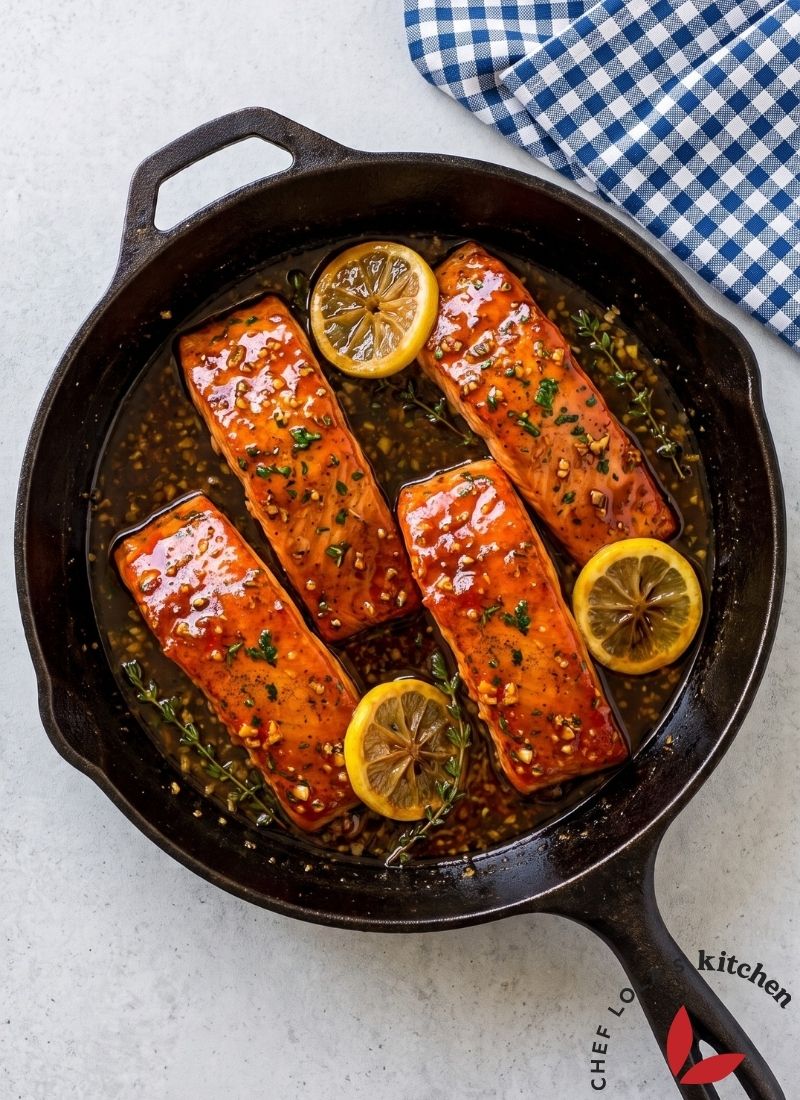
How to Tell When Salmon is Perfectly Cooked
This is the question I get asked most often about salmon, and the answer is simpler than most people think.
- Watch the side of the fillet: As it cooks from the bottom up, the flesh turns from translucent to opaque. When that opaque band reaches roughly two-thirds of the way up, it is time to flip.
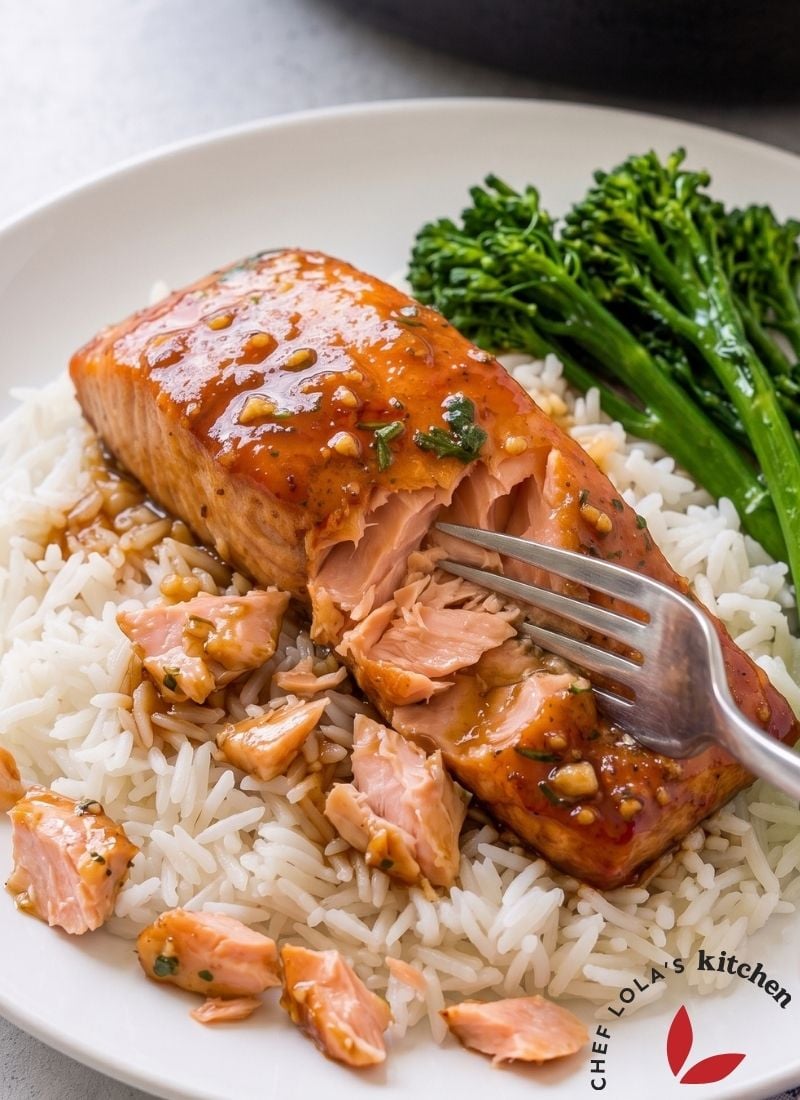
- Use a fork. Gently press a fork into the thickest part of the fillet and twist slightly. If the flesh flakes apart easily, it is done.
- Use a thermometer. For medium, you are looking for an internal temperature of 125°F (52°C). For fully cooked, aim for 135°F to 140°F (57°C to 60°C). I always recommend having a thermometer on hand for fish; it takes the guesswork out completely.
How to Keep Salmon Moist
The number one way to ruin salmon is to overcook it. Overcooked salmon is dry, chalky, and frankly disappointing. Here is how to avoid that:
- Pull it early: Residual heat keeps cooking the fish after it leaves the pan. Take it out before it looks completely finished.
- Do not glaze too early: Honey in a screaming hot pan goes from golden to bitter in under a minute. Use low heat during the last two minutes.
- Do not skip the rest: Two to three minutes makes a real difference in moisture and texture.
- Let the glaze do its job: Spoon it over the fillet at the end to form a protective, sticky coating that seals in moisture.
Serving Suggestions
What to eat with Honey Glazed Salmon
- Roasted Veggies: Roasted veggies are always a great option, especially some roasted broccoli or asparagus.
- Salad: For a healthy option, pair with a green salad or another salad you have.
- Rice: A side of rice will go perfectly with this recipe.
- Grilled corn: Nothing compares to the smoky taste of grilled or roasted corn paired with the delicate flavors of honey-glazed salmon.
- Creamy coleslaw: For a refreshing, tangy contrast, pair your coleslaw with this honey-glazed salmon.
- For a more indulgent option, serve the salmon with creamy mashed potatoes and a side of garlic bread.
- Cucumber Tomato Salad: Pair with a light, refreshing cucumber and tomato salad.
- Creamy Parmesan Risotto: Serve the salmon on a bed of risotto for an impressive, restaurant-worthy dinner.
Storage and Reheating Tips
- To store: Allow the salmon to cool completely, then transfer to an airtight container and refrigerate for up to 3 to 4 days.
- To reheat: Warm gently in a skillet over low heat with a small splash of water or extra glaze to keep it moist. Avoid the microwave if you can; it tends to dry out the fish quickly.
- To freeze: Wrap individual fillets tightly in plastic wrap, place in a sealed freezer bag, label with the date, and freeze for up to 2 months. Thaw overnight in the refrigerator before reheating.
Frequently Asked Questions
Why can't I just glaze the salmon before it goes in the pan?
Because honey burns quickly. In a 400°F skillet, the sugars scorch long before the fish cooks through, leaving you with a bitter black crust and a raw center. Sear first, glaze last.
What pan should I use?
Cast iron or stainless steel. Both hold heat well and build the browned bits that give the glaze its depth. Nonstick works, but you will build less fond and get a paler crust.
Can I use frozen salmon for this recipe?
Yes, but fresh salmon is always preferred for the best flavor and texture. If using frozen, thaw it completely overnight in the refrigerator and pat it very dry before applying the glaze. Excess moisture will prevent the glaze from caramelizing properly.
My salmon stuck to the pan. What went wrong?
Usually one of three reasons: the pan wasn't hot enough, the fillet wasn't dry enough, or you tried to move it too early. Salmon releases itself naturally once a crust has formed. If it resists, give it another 30 seconds.
Can I bake or broil this instead?
Yes. Pour the glaze over raw fillets in a lined baking dish and broil at high (around 500°F) for 10 to 12 minutes.
Can I use a different type of fish?
Yes! This honey glaze works beautifully with other fish like tilapia, cod, or halibut. Keep in mind that cooking times will vary depending on fillet thickness, so check for doneness rather than relying solely on timing.
How can I tell if the salmon is cooked through?
You'll know the salmon is ready when it breaks apart easily with a fork. The meat should look solid and split into pieces without any trouble. Also, check for caramelization, as this visual cue shows that the salmon is cooked and ready!
Can I marinate the salmon in the glaze first?
Not for this pan-seared method. A wet, sugary fillet will not sear and will burn on contact. Salt the fish 15 to 20 minutes ahead instead.
How do I know the salmon is cooked through?
The salmon is ready when it flakes easily with a fork, looks opaque pink throughout, and the glaze on top is deeply caramelized. For precision, use a meat thermometer and look for an internal temperature of 135°F to 140°F.
Can I marinate the salmon overnight?
I would not recommend marinating for more than 2 hours because the acid in the lemon juice will start to break down the fish and affect the texture. Thirty minutes is the sweet spot for great flavor without compromising the flesh.
Other delicious recipes to try out!
- Simple And Delicious Chicken Patties Recipe
- Classic Creamy Risotto Recipe
- Ultimate Juicy Grilled Steak Recipe
- Fresh Garden Tomato Salad Recipe
- Easy and Flavorful Homemade Guacamole Recipe
- Refreshing Arugula Salad Recipe
Honey Glazed Salmon
Ingredients
- 4 6-ounce salmon fillets skinless or skin on
- 2 tablespoon olive oil divided
- 1 tablespoon butter
- 3 cloves garlic minced
- 3 thyme sprigs
- 1 teaspoon fresh ginger minced
- 1 teaspoon smoked paprika
- ½ teaspoon onion powder
- 3 tablespoon low-sodium soy sauce
- 2 tablespoon lemon juice
- 1 tablespoon sriracha sauce or any other hot sauce of choice
- ⅓ cup honey
- Salt and pepper to taste
- Fresh parsley and lemon wedges for garnish
Instructions
- Pat the salmon fillets completely dry with paper towels, including the skin. Season both sides with salt and pepper and let sit at room temperature for 15 minutes.
- Heat 1 tablespoon of olive oil in a heavy skillet over medium-high heat until it shimmers.
- Place the fillets skin side down in the pan. Press gently with a spatula for 10 seconds to prevent curling, then sear undisturbed for 4 to 5 minutes until the skin is crisp and the flesh turns opaque two-thirds of the way up.
- Flip and cook for 2 to 3 minutes more. Transfer fillets to a plate (they will not be fully cooked yet).
- Reduce heat to medium-low. Add the butter and remaining tablespoon of olive oil. Once melted, add the garlic and cook for 30 seconds until fragrant.
- Add the 3 thyme sprigs, ginger, smoked paprika, onion powder, soy sauce, lemon juice, sriracha, honey, and water. Stir, scraping up the browned bits from the bottom of the pan, and simmer for 1 to 2 minutes until slightly thickened.
- Return the salmon to the pan skin side down and spoon the glaze over the tops for 1 to 2 minutes until internal temperature reaches 130°F to 135°F (54°C to 57°C).
- Garnish with parsley and lemon wedges. Rest 2 to 3 minutes before serving. Garnish with parsley and lemon wedges.
Notes
Recipe Notes
- Do not glaze the salmon before searing; honey burns quickly over high heat.
- Keep the fish skin side down during the glazing step to preserve the crisp skin.
- If the glaze thickens too much in the pan, loosen it with an extra tablespoon of water.
Nutrition
Let’s connect on YouTube, Facebook, and Instagram. I love keeping in touch with you; nothing brings me more joy than seeing pictures of your creations. Tag me @cheflolaskitchen on Instagram and Facebook.


