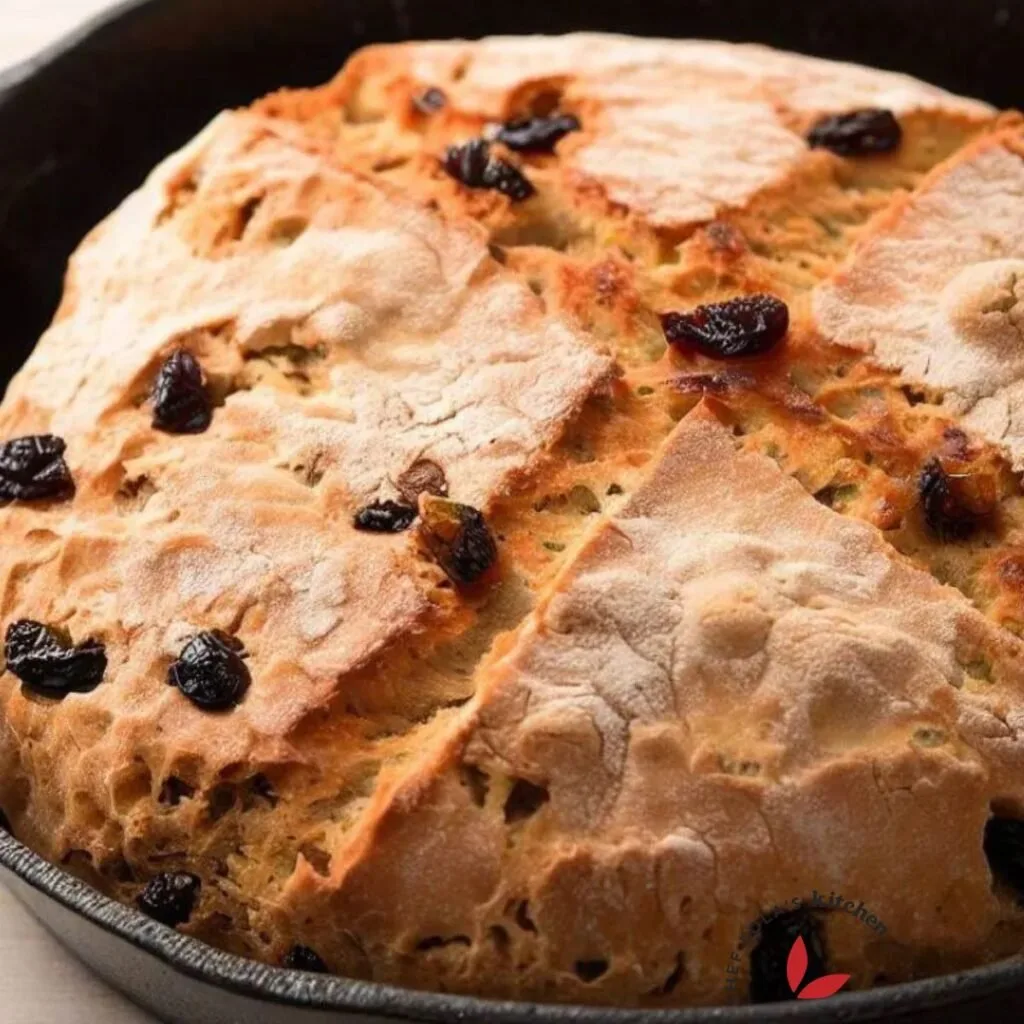
This traditional Irish soda bread comes together in under an hour with no yeast, no kneading, and no fuss. Golden on the outside, soft, and slightly sweet on the inside!
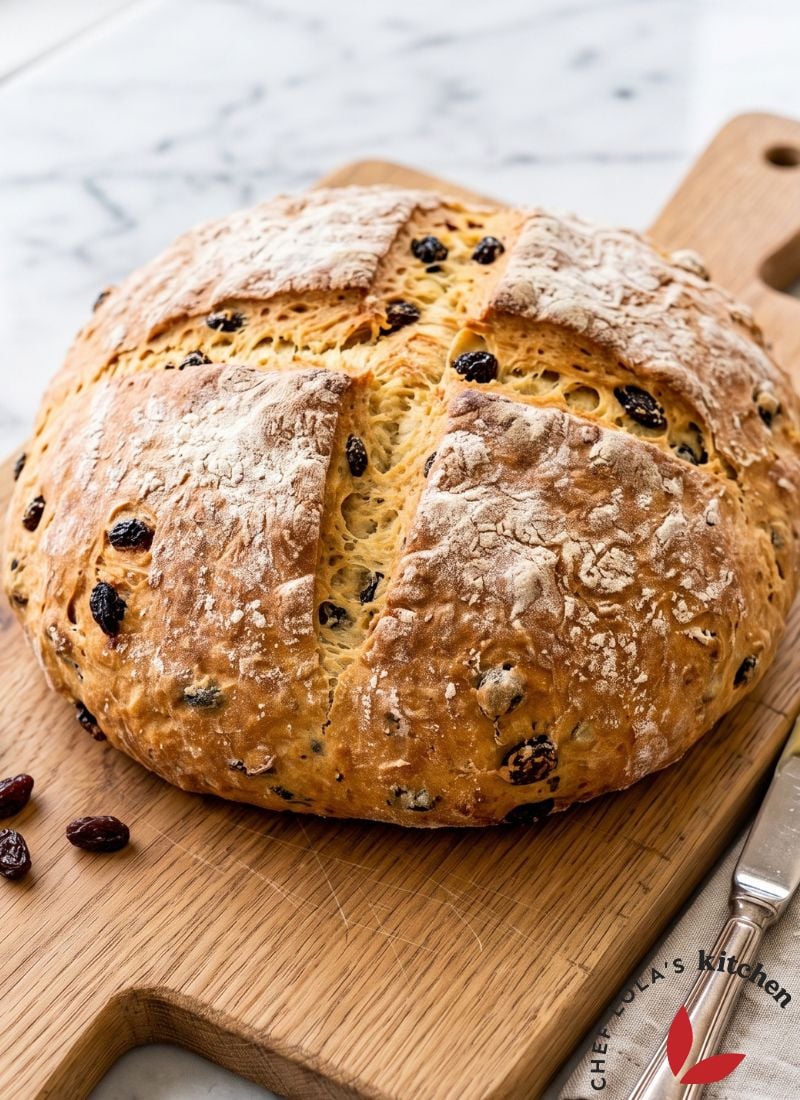
Irish Soda Bread - Traditional Recipe, No Yeast, No Knead
There are days when you crave fresh, homemade bread but simply don't have the time or energy to deal with yeast and long rising times. This is the recipe for those days.
This is the recipe for those days. Irish soda bread asks very little of you: no yeast, no kneading, no proofing, and no complicated techniques. In return, it gives you a beautiful, rustic loaf with a tender crumb that pairs with practically everything.
Irish soda bread is made with just four ingredients: flour, baking soda, salt, and buttermilk. Baking soda is used as the leavening agent instead of yeast, which makes it quick and easy to prepare.
This version adds butter, eggs, sugar, and a handful of raisins to create a richer, more flavorful loaf while still staying true to the spirit of the original.
The best part? Because there is no yeast, you can go from mixing bowl to oven in about 10 minutes flat.
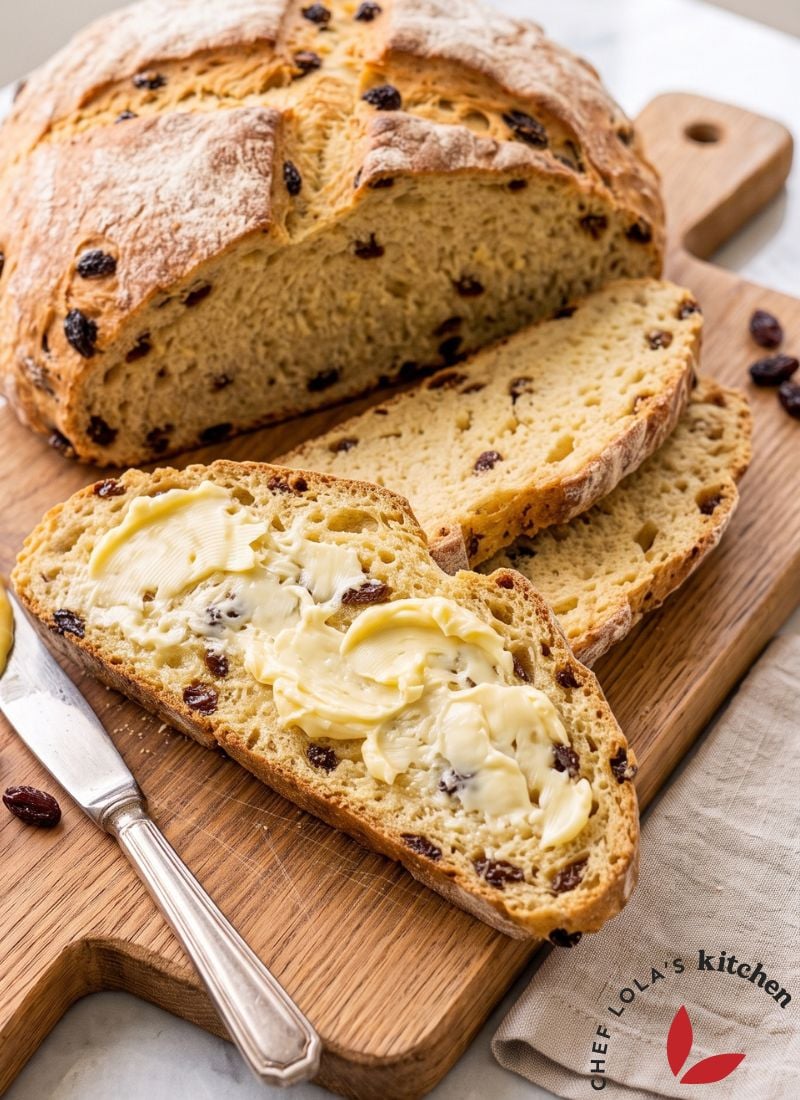
I baked this in a cast iron skillet to get that signature golden, slightly crispy crust. The result was exactly what Irish soda bread should be: dense in the best possible way, slightly tangy from the buttermilk, and just sweet enough from the raisins to feel like a treat without being an actual dessert.
If you love easy, beginner-friendly bread recipes, this one sits right alongside my No-Knead Potato Bread and No-Knead Sandwich Bread in terms of how little effort it takes for such an impressive result.
What Is Irish Soda Bread?
Irish soda bread is a traditional quick bread that originated in Ireland in the 19th century. Unlike most bread, it uses baking soda as the leavening agent instead of yeast. When the baking soda meets the acidic buttermilk in the dough, it creates bubbles that make the bread rise. No yeast, no proofing, no waiting around!
This traditional Irish delight has been a staple in Irish households for centuries, known for its rustic appearance, dense texture, and delightful flavor. It embodies the spirit of Irish cooking and the resourcefulness of its people. Its simplicity and rich flavor have made it a timeless favorite, cherished across generations.
Irish Soda Bread is not only a wonderful accompaniment to soups, stews, and hearty Irish dishes but also a delightful treat on its own. It's dense texture and rustic charm make it a beloved staple at Irish celebrations such as St. Patrick's Day, where it is shared among friends and family.
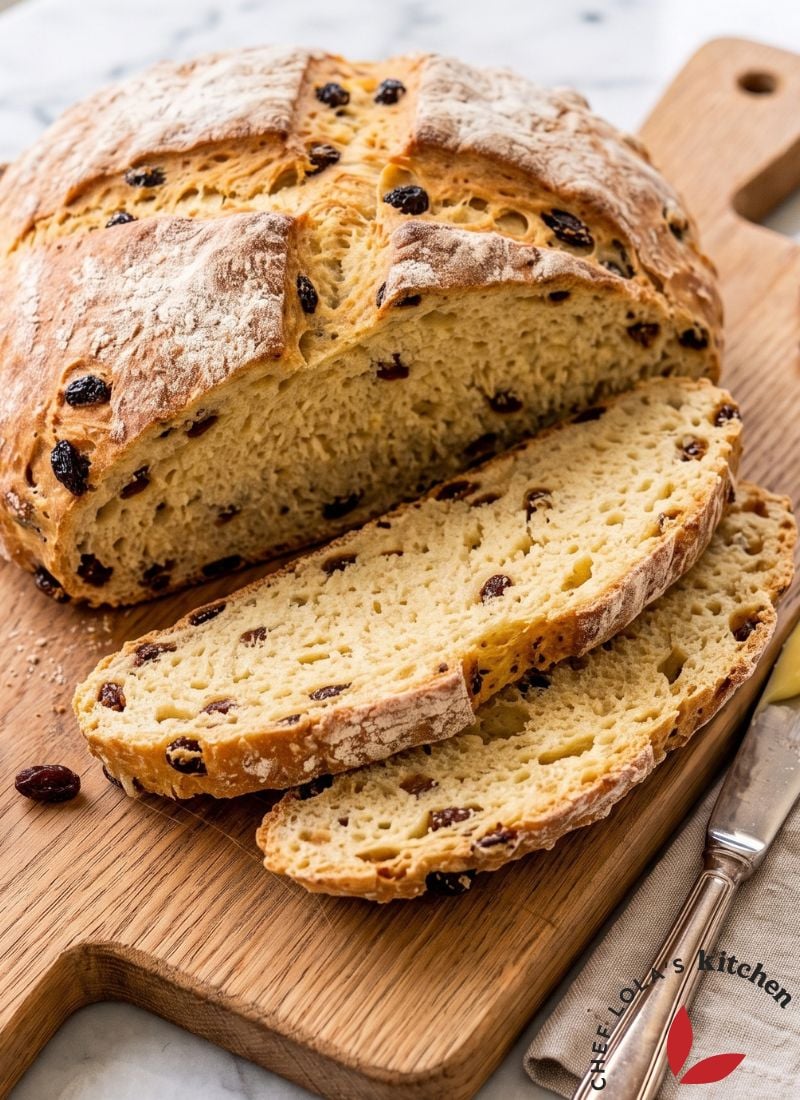
One of the most distinctive characteristics of Irish soda bread is its dense, cake-like texture. This comes from the reaction between acidic buttermilk and alkaline baking soda, which creates carbon dioxide and causes the bread to rise. The result is a moist and tender crumb that is both satisfying and comforting.
Why Do We Cut a Cross on Top?
Before the bread goes into the oven, you'll score a deep "X" into the top of the dough. This is one of the most distinctive features of Irish soda bread, and it serves a very practical purpose.
The cross allows the heat to penetrate the center of the thick dough more evenly, helping it cook all the way through without burning the outside. It also gives the bread a place to naturally expand as it bakes.
Traditionally, the cross was said to ward off evil spirits and "let the fairies out." While I can't verify the fairy part, I can confirm it makes a beautifully rustic loaf that breaks apart easily for sharing!
Check out our other amazing bread recipes you'll love: Sweet Milk Bread recipe, Oatmeal Banana Bread – Gluten Free, Moist and Indulgent Pumpkin Bread, and No-Knead Garlic Pull-Apart Bread Loaf.
What Does It Taste Like?
If you have never tried it before, the closest comparison is a cross between a biscuit and a scone. The outside is slightly crumbly and golden, while the inside is soft, moist, and tender.
The buttermilk gives it a gentle tang, the sugar balances that out with a mild sweetness, and the raisins add little pockets of flavor throughout.
It isn't a sweet bread, but it leans just enough in that direction to make it equally at home on a breakfast table or served with a savory dinner.
Ingredients for making Irish soda bread
- All-purpose flour - all-purpose gives you the right tender texture for soda bread
- Granulated sugar - to add a touch of sweetness and to balance out the tanginess of the buttermilk.
- Salt - it adds flavor and enhances the overall taste of the bread
- Baking soda - this is the leavening agent. Our leavening agent. Be precise with your measurement here! Too much baking soda will leave a metallic aftertaste, and too little means your bread won't rise.
- Cold butter - Cold butter is key; it creates a flakier, more tender crumb, just like when you make pastry.
- Raisins or currants - to add to the sweetness
- Egg - Adds structure and richness to the dough
- Buttermilk - The acidity reacts with the baking soda to leaven the bread and gives it that distinctive moist, tender crumb. Please don't substitute with regular milk!
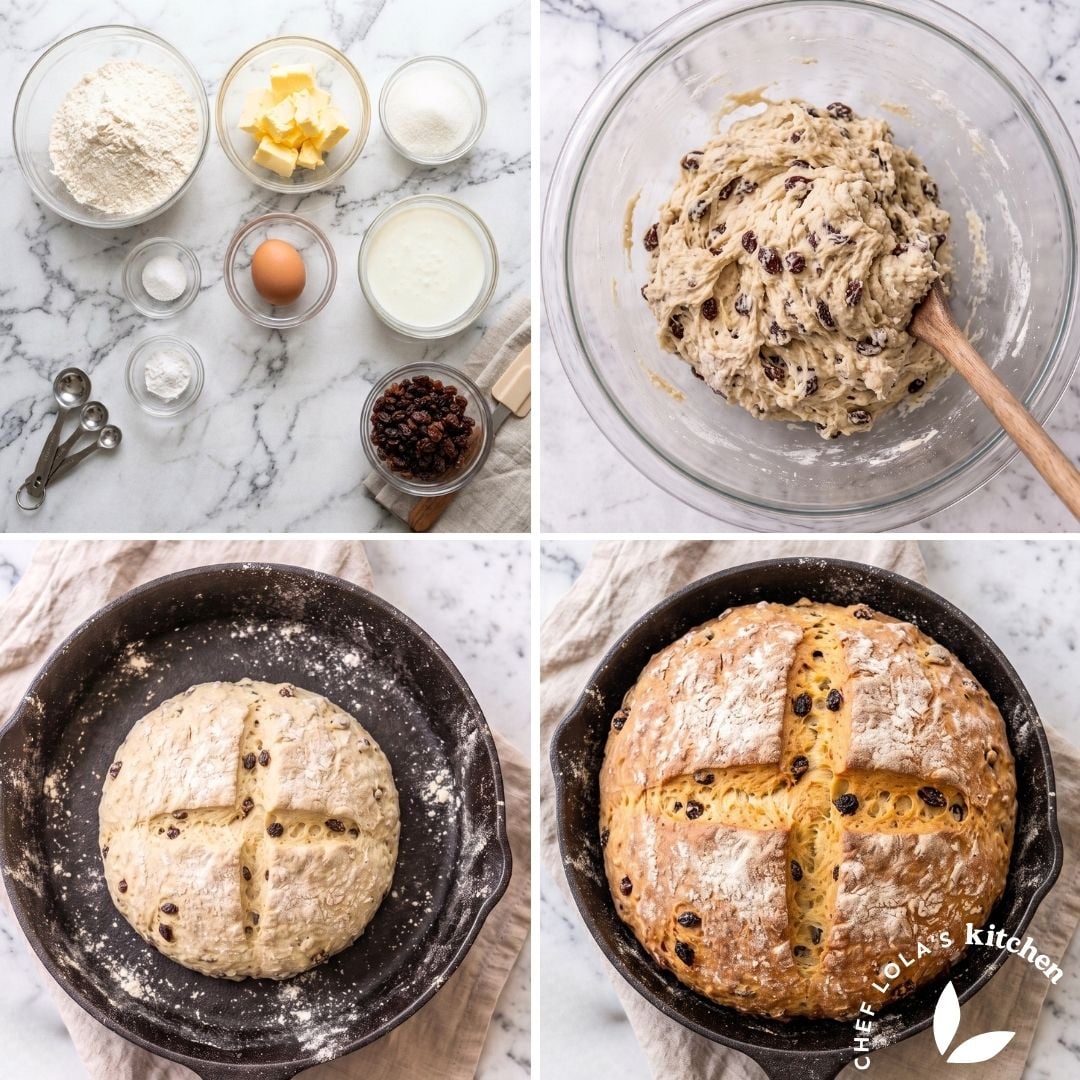
How to make Irish soda bread
- Preheat the oven to 375°F/220°C and grease a 10-inch cast iron skillet.
- Whisk flour, sugar, salt, and baking soda in a large bowl.
- Cut the butter into the mixture using a pastry cutter or your fingers. Add in raisins and mix.
- Pour in the buttermilk and egg, and mix with a spoon until the dough comes together.
- Shape the dough into a round loaf and place it onto the skillet.
- Use a knife to create a deep "X" shape into the top of the dough.
- Bake for 50-55 minutes until the crust is golden brown and sounds hollow when tapped.
- Cool on a wire rack before slicing and serving.
What to Serve with Irish Soda Bread
- Traditionally, it is served as a side to savory dishes like soups and stews or simply sliced and served with butter or cheese. It is also commonly enjoyed for breakfast or as a snack with tea.
- Slice it thick and spread it with cold butter while it is still slightly warm (my favorite way to eat it!).
- Serve alongside a hot pan of Shakshuka. The dense bread is perfect for scooping up the spiced tomato sauce.
Storage and Reheating Tips
- At room temperature: Let the bread cool completely, then wrap it tightly in plastic wrap. It will keep on the counter for 1 to 2 days.
- In the refrigerator: For longer storage, move it to the fridge where it will keep for up to a week. Wrap it well so it doesn't dry out.
- In the freezer: Wrap the fully cooled loaf tightly in plastic wrap, then in aluminum foil. Freeze for up to 2 to 3 months. Thaw at room temperature overnight before you want to eat it.
- To reheat: Pop a slice in the toaster or warm it in the oven at 350°F for about 8 to 10 minutes. It brings the crust right back to life!
- Make-ahead tip: You can easily bake this bread a day ahead of time. It actually slices a bit more cleanly the next day once it has fully set.
Frequently Asked Questions
What is traditional Irish soda bread made of?
Traditional Irish soda bread is made of flour, baking soda, salt, and buttermilk. Recipes vary, but these four ingredients are essential to traditional Irish soda bread.
Why is my Irish soda bread so dry?
This usually comes down to two things: overworking the dough or overbaking. Mix the dough only until it comes together, and pull the bread from the oven as soon as it sounds hollow when tapped.
Do I have to add raisins?
Not at all! The traditional four-ingredient version contains no raisins and is a bit more savory. The version with raisins and sugar (sometimes called "Spotted Dog") is just a sweeter variation that's lovely for breakfast. Go with whichever you prefer!
Can I make this without a cast iron skillet?
Yes! A regular baking sheet lined with parchment paper or a greased round cake pan will both work beautifully.
Can I make Irish Soda Bread ahead?
While your bread may dry out if stored out for too long, you can make Irish Soda Bread ahead of time. If you want to make Irish Soda Bread ahead of time, I recommend wrapping the bread tightly in plastic wrap or foil and storing it at room temperature.
Can I Freeze Irish Soda Bread?
If you need to store it for longer, you will need to freeze Irish soda bread. Irish soda bread can be frozen for up to 2-3 months. Wrap it in plastic wrap and place it in an airtight container before freezing.
How to reheat Irish Soda Bread
When you're ready to enjoy the bread again, let it thaw at room temperature before reheating it in a toaster or oven. This will help the bread return to its original texture and flavor.
Tips to note
- The dough should be sticky and wet. Don't overwork the dough; otherwise, the bread will turn out tough.
- If you can't shape it into a ball, add a little more flour at a time until you can form the ball.
- Be precise with the amount of baking soda used in the recipe. Too much or too little can result in an uneven rise or even a metallic aftertaste.
- Mark the top of the bread with a cross shape before baking; this helps the bread rise properly and gives it a rustic appearance.
- Best to use a cast-iron skillet for a perfectly crispy exterior. If you don't have one, line a tray with parchment paper, place the shaped dough on it, and bake.
- Let the bread cool before slicing to allow the crumb to set properly.
Other Bread Recipes You may enjoy:
- How To Make Garlic Bread (Garlic Knots)
- No-Knead Garlic Pull-Apart Bread Loaf
- How to Make Easy No-Knead Rosemary Focaccia Bread
- No Knead Potato Bread
- Sandwich Bread (No-kneading!)
- Sweet Milk Bread recipe
Traditional Irish Soda Bread
Ingredients
- 4 cups all-purpose flour plus more for dusting
- ¼ cup granulated sugar
- 1 teaspoon salt
- 1 teaspoon baking soda
- 6 tablespoon cold butter cut into small pieces
- 1 ½ cups buttermilk
- 1 egg
- 1 cup raisins or currants
Instructions
- Preheat your oven to 375°F (220°C) and grease a 10-inch cast-iron skillet generously with butter.
- In a large bowl, whisk together the flour, sugar, salt, and baking soda.
- Using a pastry cutter or your fingers, cut in the cold butter until the mixture resembles coarse crumbs. Add in the raisins and stir to combine.
- Make a well in the center and pour in the buttermilk and egg. Mix gently with a wooden spoon until the dough just comes together. Do not overmix.
- Turn the dough onto a floured surface, shape it into a round loaf, and place it onto the prepared skillet.
- Use a sharp knife to cut a deep "X" shape into the top of the loaf.
- Bake the bread for 50 to 55 minutes or until the crust is golden brown and the loaf sounds hollow when tapped.
- Transfer to a wire rack and cool for at least 20 minutes before slicing.
Notes
- The dough should be sticky and wet. Don't overwork the dough; otherwise, the bread will turn out tough.
- If you can't shape it into a ball, add a little more flour at a time until you can.
Nutrition
Let’s connect on YouTube, Facebook, and Instagram. I love keeping in touch with you; nothing brings me more joy than seeing pictures of your creations. Tag me @cheflolaskitchen on Instagram and Facebook.