
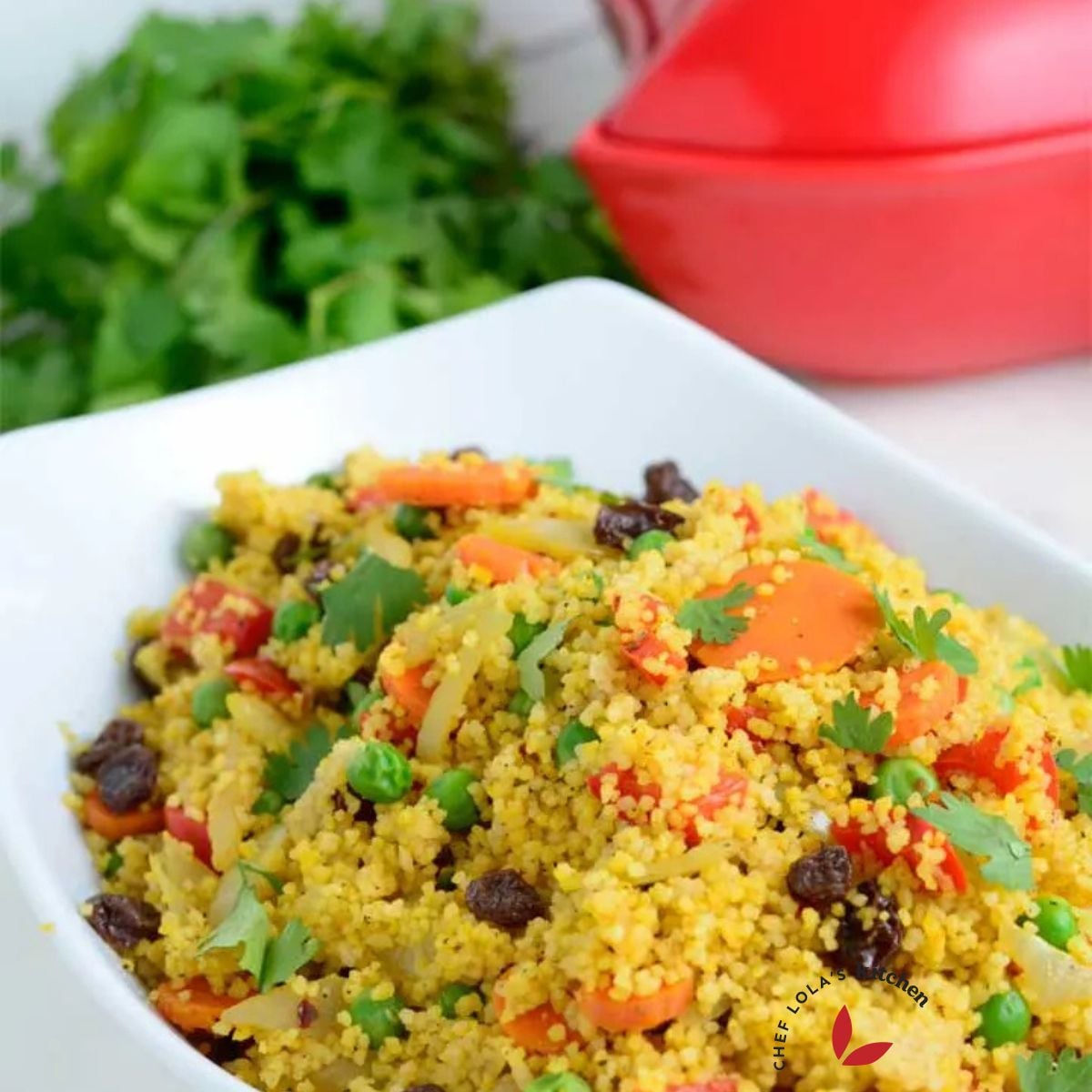
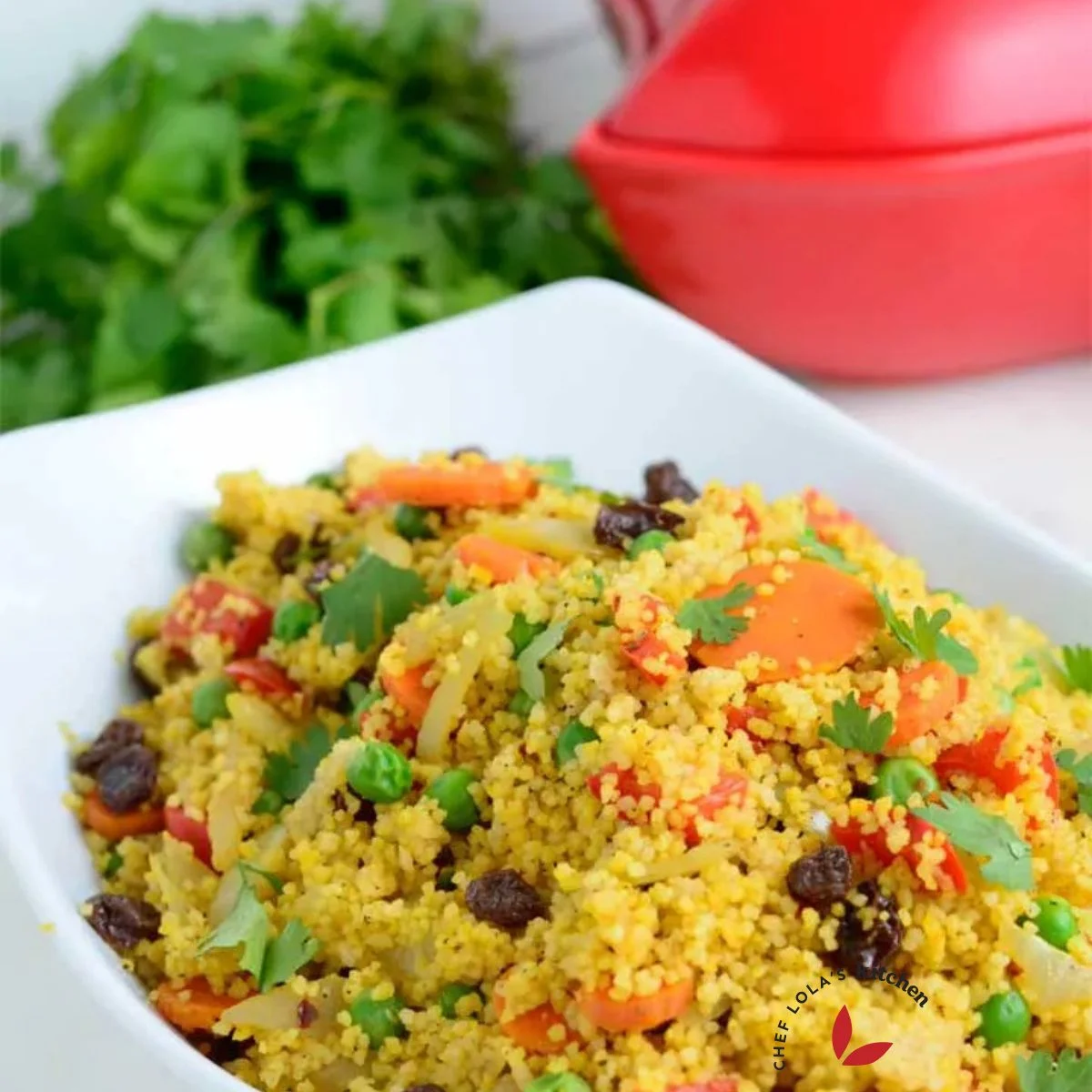
If there’s one meal I turn to when I need something quick, nourishing, and delicious, it’s this easy one-pot vegetable couscous. You can have it on the table in just 30 minutes.


Vegetable Couscous
What Is Vegetable Couscous?
Vegetable couscous is a dish made with couscous, sautéed or roasted vegetables, and herbs and spices.
This easy vegetable couscous recipe is the kind of meal you make when you want something quick, healthy, and satisfying without spending hours in the kitchen.
It’s light yet satisfying, packed with colorful vegetables, and infused with warm, comforting flavors. The best part? You can have it on the table in just 30 minutes, making it perfect for busy weeknights or those days when you want a wholesome meal without spending hours in the kitchen.
This is one of those recipes that quietly becomes part of your regular rotation and stays there.
Vegetable couscous is often served as a main dish or side and can be customized with different vegetables, spices, and proteins.


What Is Couscous?
Couscous is a North African staple made from tiny granules of semolina wheat. It cooks incredibly fast and absorbs flavors beautifully, which is why it’s one of my go-to ingredients for quick meals.
Originally from North African cuisine, couscous is known for being:
- quick to cook
- light and fluffy
- incredibly versatile
Couscous may look similar to fonio when cooked, but they have totally different flavor profiles.
Why You’ll Love This Recipe
- Quick and easy – ready in about 30 minutes
- Healthy and nutritious – packed with vegetables
- Light yet satisfying – perfect balance of texture
- Great for meal prep – stores well and reheats easily
- Highly customizable – use whatever vegetables you have
- Perfect side or main dish – works for any occasion


Ingredients For Making Vegetable Couscous
- Red Bell Pepper – adds sweetness and color
- Onions – build the base flavor
- Carrots – bring texture and a natural sweetness
- Peas (frozen) – quick, convenient, and nutrient-rich
- Raisins – a subtle sweetness that balances the spices
- Cinnamon & Turmeric – warm, earthy flavors that elevate the dish
- Olive Oil – enhances flavor and helps sauté the vegetables
- Broth (not water!) – the key to flavorful couscous
- Fresh Parsley – brightens everything at the end
How to Make Vegetable Couscous
1. Build the Flavor Base
Heat the olive oil in a pan over medium heat.
Add the chopped onions, bell peppers, and carrots, and sauté for about 5 minutes until slightly softened.
2. Add Layers of Flavor
Stir in the peas, raisins, cinnamon, turmeric, and crushed pepper.
Season with salt and black pepper to taste.
Let everything cook together briefly so the flavors begin to blend.
3. Add the Broth
Pour in the broth and bring it to a boil.
This step is crucial—your broth determines how flavorful your couscous will be.
4. Add Couscous & Steam
Stir in the couscous, cover immediately, and turn off the heat.
Let it sit undisturbed for 5 minutes.
5. Fluff & Finish
Use a fork to gently fluff the couscous.
Sprinkle with fresh parsley and serve.
Tips for Perfect Couscous Every Time
1. Use Broth, Not Water
Couscous absorbs whatever liquid you use, so make it flavorful.
2. Stick to the Liquid Ratio
Too much broth = soggy couscous
Too little = dry, undercooked grains
Precision matters here.
3. Don’t Overcook
Once you add the couscous, turn off the heat. Residual steam does the work.
4. Keep Vegetables Balanced
Too many vegetables can overwhelm the couscous and affect texture. Keep it balanced.
Substitutes And Variations:
Raisins Alternatives
Raisins add a subtle sweetness that balances the spices, but you can switch them out:
- Dried cranberries
- Chopped dates
- Leave them out entirely for a fully savory version
Broth Options
- Chicken broth: richer flavor
- Vegetable broth: perfect for vegetarian/vegan
- Water + seasoning: use only if necessary, but expect less flavor
Oil Substitutes
- Butter (for a richer taste)
- Coconut oil (adds a slight sweetness)
Herb Variations
- Parsley - cilantro or green onions
- Add mint for a fresh, North African-inspired twist
Make It Your Own
Couscous is also very versatile so you don't have to be limited by my choice of vegetables. Feel free to add whatever vegetable is lingering in your crisper drawer, begging to be used.
- Sweet corn
- Green beans
- Zucchini
- Spinach
- Leftover roasted vegetables
It’s a great way to use up whatever you have sitting in your fridge.
What to Serve With Vegetable Couscous
Pairs perfectly with:
Frequently Asked Questions (FAQ)
Is couscous gluten-free?
No, couscous is made from wheat. For a gluten-free option, try quinoa, fonio, or rice.
Can I make vegetable couscous ahead of time?
Yes, it’s great for meal prep and tastes even better after the flavors meld.
Will couscous keep overnight?
Yes, the couscous will keep very well overnight in the fridge.
Can I warm Couscous?
Yes, you can warm couscous. However, If you warm it over the stovetop it might turn out soggy. It's best to eat it cold or just microwave it.
Can I eat cold couscous?
Yes, you can eat hot or cold.
Other delicious couscous recipes to try:
Vegetable Couscous
Ingredients
- 1 red bell pepper diced
- ½ cup onion chopped
- ½ cup carrots sliced
- 1 tablespoon olive oil
- 1 ¼ cups broth chicken or vegetable
- 1 cup peas frozen or fresh
- 2 tablespoon raisins
- ⅛ teaspoon cinnamon
- ¼ teaspoon turmeric
- ¾ cup couscous
- salt and black pepper to taste
- ¼ cup fresh parsley chopped
Instructions
- Heat the olive oil in a pan over medium heat. Add the onions, bell peppers, and carrots, and sauté for about 5 minutes until slightly softened and fragrant.
- Stir in the peas, raisins, cinnamon, and turmeric. Season with salt and black pepper to taste. Cook for another 1–2 minutes to allow the flavors to blend.
- Pour in the broth and bring it to a boil.
- Stir in the couscous, cover immediately, and turn off the heat. Let it sit undisturbed for 5 minutes.
- Fluff the couscous gently with a fork and sprinkle with fresh parsley before serving.
Notes
- Use broth, not water: Couscous absorbs liquid quickly, so using a well-seasoned stock adds depth and flavor to the final dish.
- Measure carefully: Too much liquid can make the couscous soggy, while too little can leave it undercooked. Stick closely to the measurements.
- Keep it balanced: Avoid overloading with vegetables, as this can affect the texture of the couscous.
- Make it flexible: Feel free to swap or add vegetables like corn, green beans, zucchini, or spinach depending on what you have on hand.
Nutrition
Olanike
Monday 14th of September 2026
Very easy to follow and it came out delicious! I may just add some scotch bonnet pepper next time, but I enjoyed this. Thank you
Lola Osinkolu
Thursday 17th of September 2026
Thank you for the feedback Olanike. I’m so glad you enjoyed it! 😊 And yes, a little Scotch bonnet would be a good addition if you like some heat.
Stacy
Thursday 29th of May 2025
Thanks Lola. This was easy and very good. I served it as a side for Morrocan spiced, spatchcocked roast chicken. The turmeric and cinnamon really added a lot, and went well with the seasonings for the chicken. Added some leftover chicken to the leftovers for our lunches the next day.
Chef Lola Osinkolu
Friday 25th of July 2025
Thanks for the feedbcak, Stacy.
Ida Boyd
Sunday 26th of February 2023
Looks good. I think I will try that as soon as I can
Chef Lola's Kitchen
Wednesday 1st of March 2023
Thank you, Ida. Can't wait for you to try it.
Brenda Harper
Sunday 26th of February 2023
I Love to cook l cook every day thank you
Chef Lola's Kitchen
Wednesday 1st of March 2023
Glad to learn this! Well done, Brenda!
Phil Cal
Wednesday 13th of November 2019
I cooked yesterday...thank you , good