
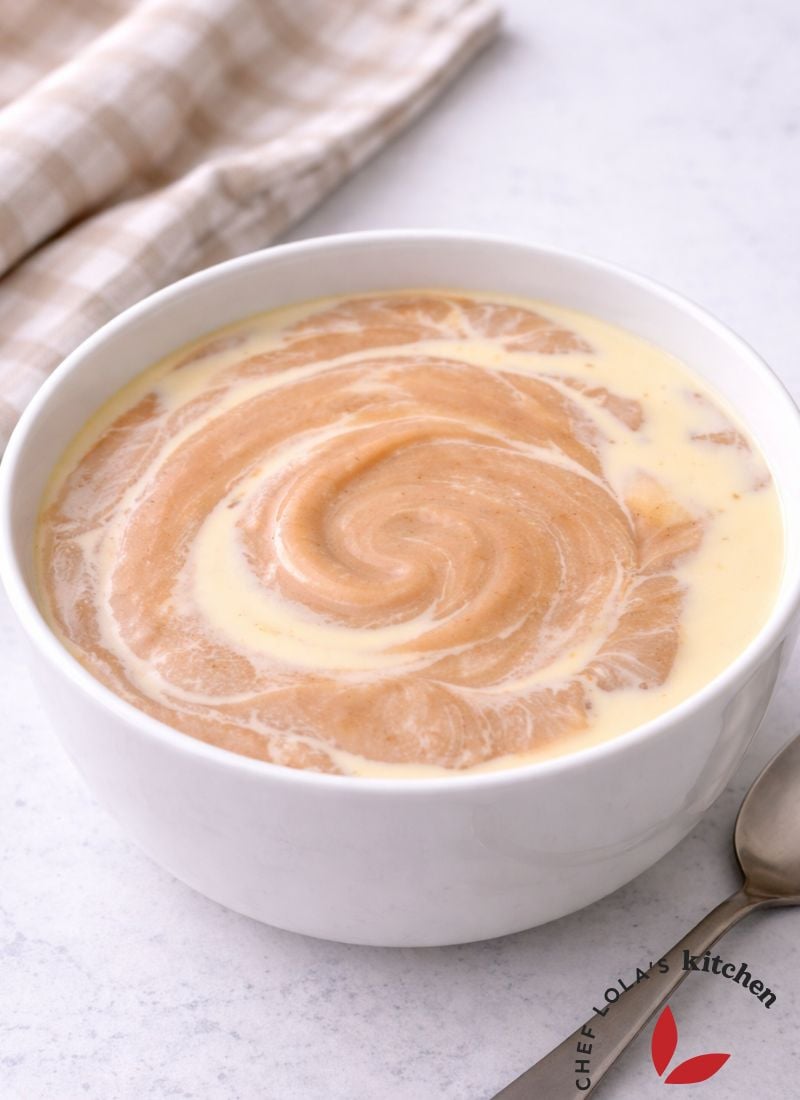
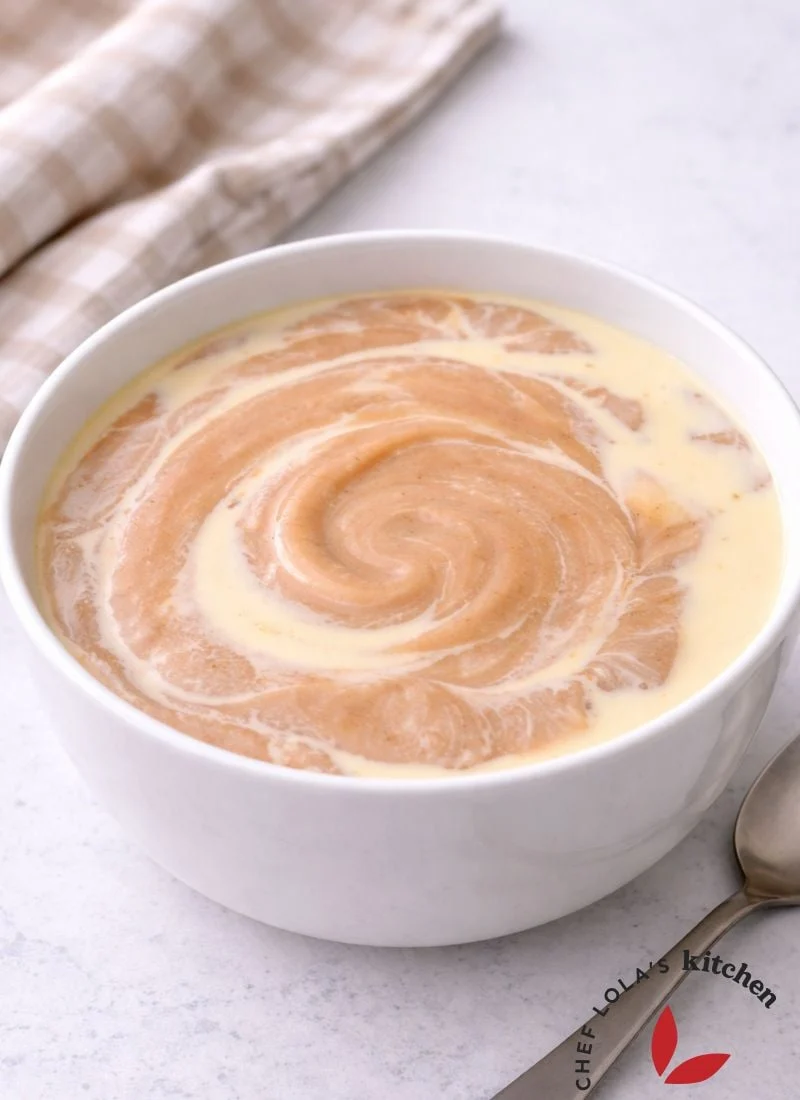
If you need a very comforting hot cereal breakfast porridge, Nigerian pap is one you should try. Let me show you how I make this classic Nigerian breakfast staple.
Why Nigerian Pap Will Always Feel Like Home
Known as ogi, akamu, or koko, depending on where you’re from. Nigerian pap is a beloved traditional breakfast that cuts across tribes and regions.
I grew up eating Nigerian pap. If you grew up in a Nigerian home, chances are pap raised you. 🙂
Pap still shows up in my kitchen on quiet mornings, sick days, and anytime our family wants something light, warm, and comforting.
This is one of those recipes that doesn’t try to impress; it simply nourishes. Many people don't realize that the fermentation process actually makes the nutrients easier for our bodies to absorb.
What Is Nigerian Pap (Ogi / Akamu)?
Nigerian pap, known as ogi, akamu, or koko, is a smooth, fermented cereal porridge. Traditionally made from one or a mixture of grains, such as corn (maize), millet, or sorghum. It’s one of the most common breakfast foods in Nigeria
Pap is:
- Light
- Smooth
- Slightly tangy from fermentation
- Easy to digest
- Budget-friendly
- Naturally gluten-free
- Quick to prepare once the base is ready
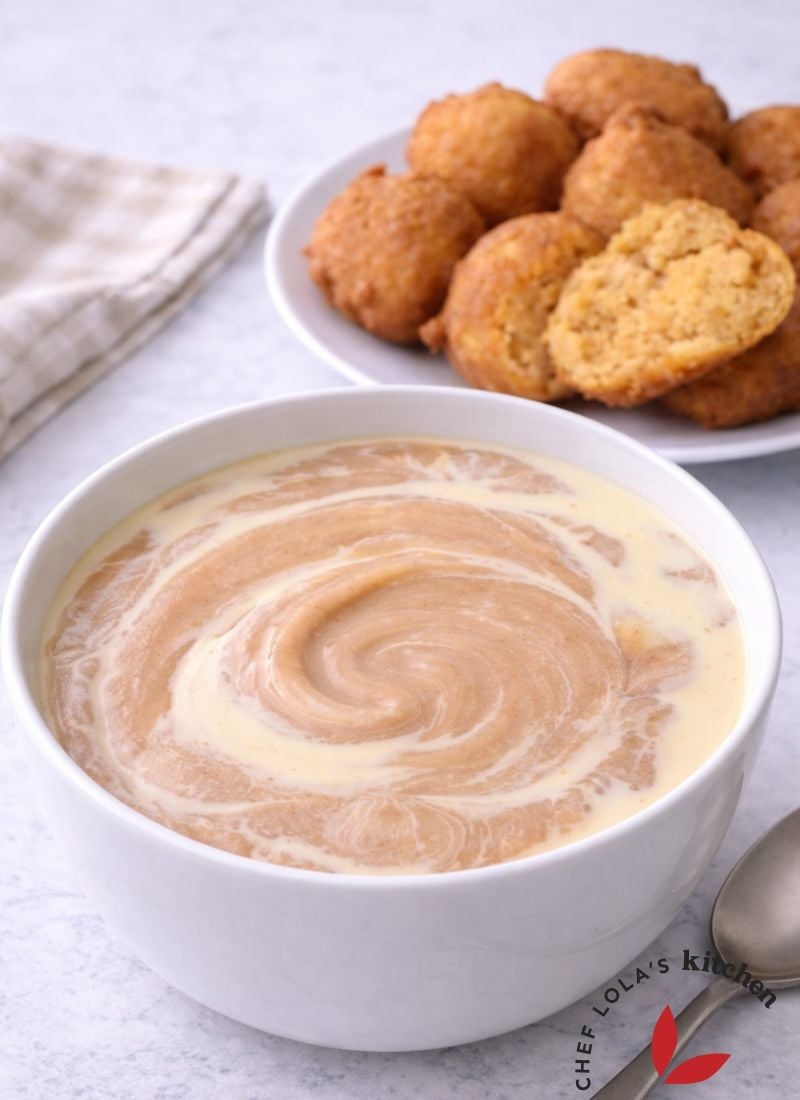
Pap is rarely eaten alone. It’s often served warm and enjoyed with milk and sugar. I love serving it with Akara or a side of Moi Moi. Other great sides include: Ewa riro - Stewed Beans and Fish. If you're feeling adventurous, you can even pair it with sweet Puff Puff.

Why Nigerian Pap Is So Special
Pap is what many of us were fed as children, and what new mothers and babies often eat.
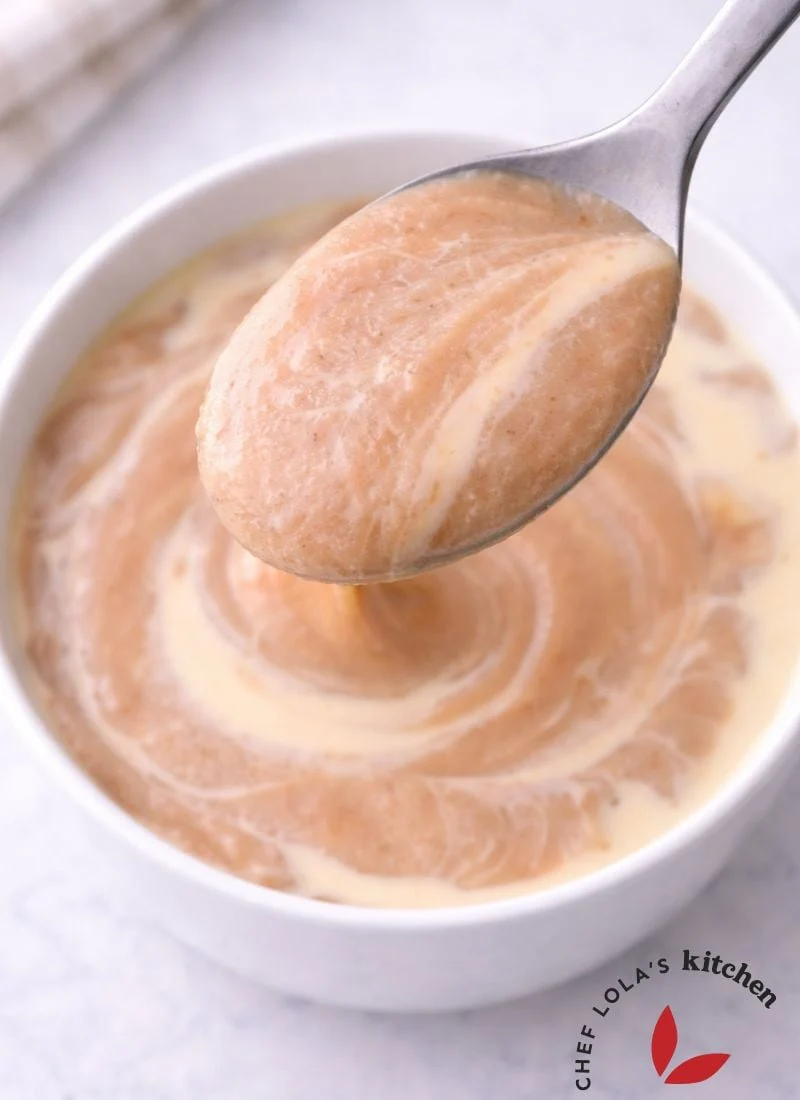
What makes it special to me is how simple it is. No spices, no heavy ingredients. When made properly, pap is smooth and lump-free.
I have a collection of my favorite Breakfast Cereal Recipes, and I did not hesitate to add pap because of the nostalgic memories it brings.
Is Pap Healthy?
The simple answer is yes.
Pap is:
- Low in fat
- Easy to digest
- Naturally gluten-free
Because it’s fermented, it’s often gentle on the stomach. That’s why it’s commonly eaten during recovery, by nursing mothers, and by babies transitioning to solid foods.
How Ogi Is Traditionally Made (Brief Background)
Traditionally, ogi is made by soaking dried grains. You can use corn, millet, or sorghum. Soak them for 3 to 5 days. The time depends on how fermented you want it.
The grains are then washed and destoned. Then, the clean grains are blended. We now strain the blended ogi through a fine sieve, and the chaff is discarded or fed to goats because it's rich in fiber. The result is a smooth, starchy base that can be refrigerated and cooked fresh as needed.
Most people today use ready-made pap from African stores, and that’s perfectly fine.
The dry ogi powder is also becoming increasingly popular, and it can be found in regular supermarkets in Nigeria or in African/Caribbean stores abroad.
Ingredients for Nigerian Pap (With Substitutions)
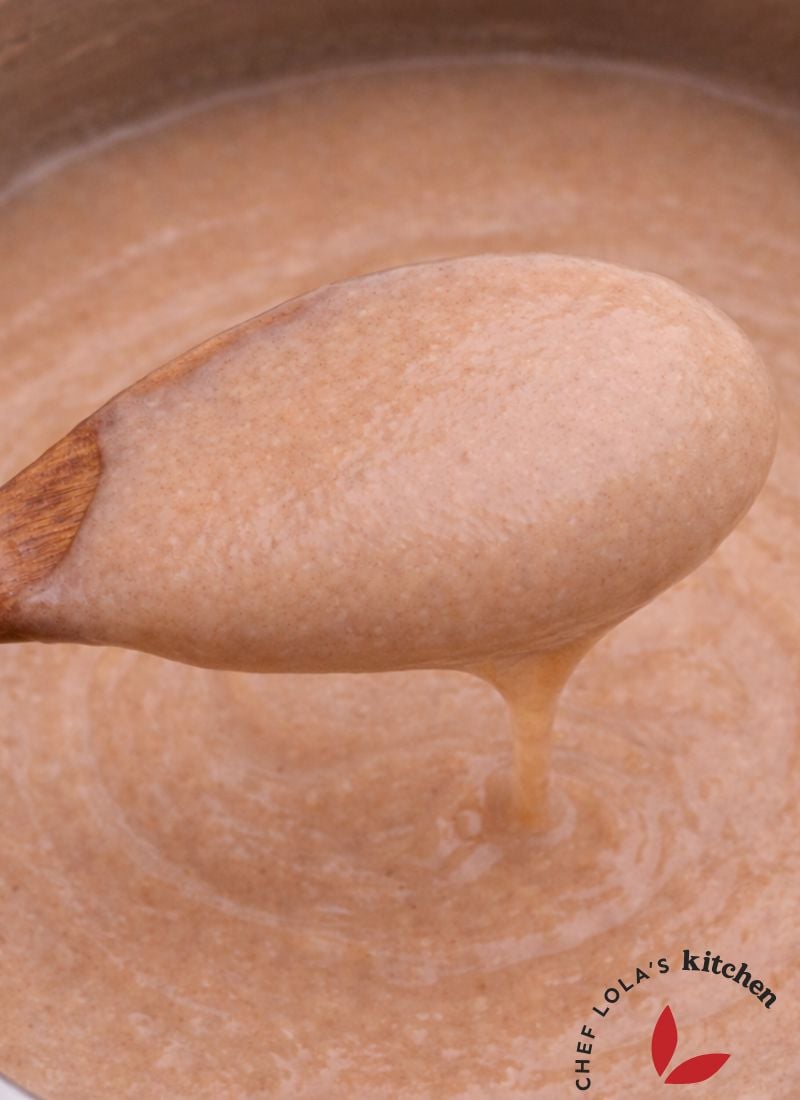
- Pap (ogi / akamu): You can use homemade or store-bought wet pap.
- Water: hot and cold
Optional Add-Ins
- Fresh or evaporated milk
- Sugar or honey
Substitutions
- I used millet ogi in this recipe, but you can use sorghum or corn instead of millet
- Sweeten with dates or maple syrup if preferred
Step-by-Step: How to Cook Nigerian Pap Perfectly
- Mix the Pap Slurry
In a bowl, combine pap with cold water and mix until smooth. Make sure there are no lumps at this stage.
- Heat Water
Bring water to a boil in a kettle or pot. You want it very hot.
- Cook the Pap
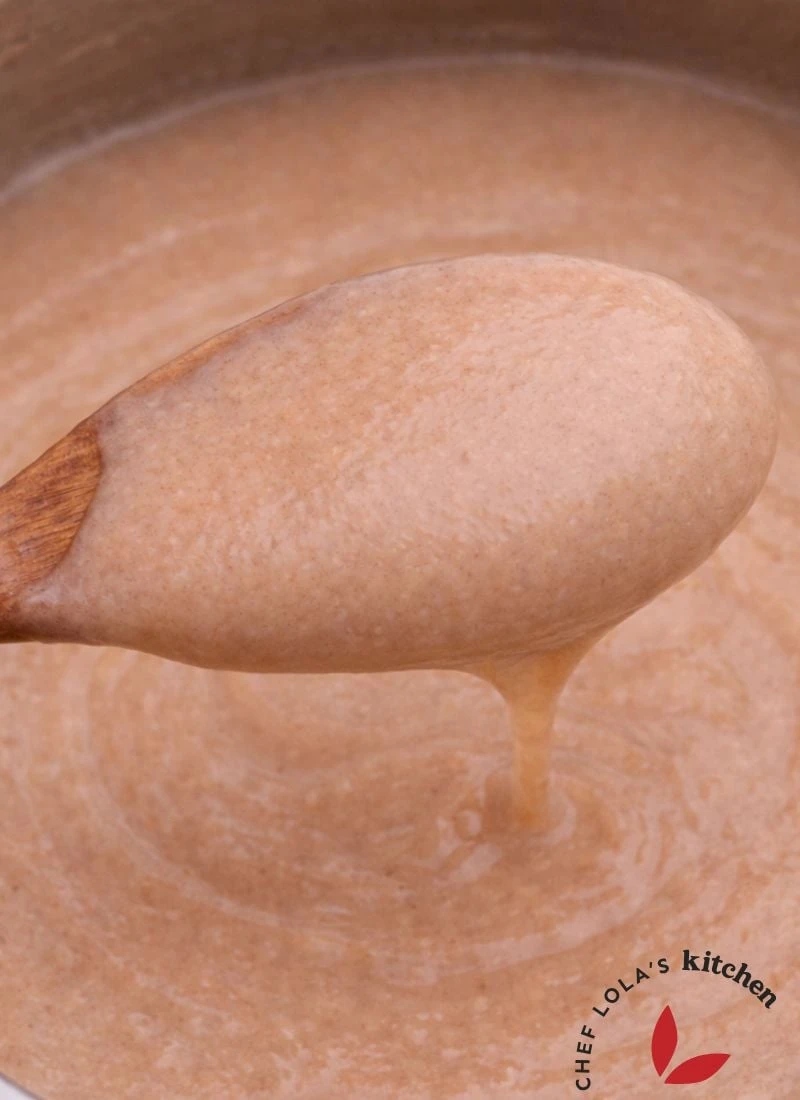
Pour the hot water slowly into the pap slurry while stirring continuously. The mixture will thicken quickly. Place the pap on low heat and keep stirring until smooth, glossy, and cooked through, about 5 minutes.
- Adjust and serve
Adjust the thickness to your preference and serve immediately while hot.
How I get smooth, lump-free pap - Helpful Tips
- Always mix pap with cold water first
- Use a whisk or wooden spoon
- Add hot water gradually
- Stir continuously, don’t walk away
Common Pap Pairings
Frequently Asked Questions (FAQs)
Yes. Ogi and akamu are regional names for the same dish.
Pap is best fresh, but you can reheat gently with added water.
That is from the fermentation process. It’s normal.
Yes, transitioning babies can eat pap. In fact, it's one of the first foods to transition to in Nigeria because it's very gentle on the tummy. However, it needs to be served without a sweetener.
Pap can be thick or light, depending on preference.
I usually make mine medium-thick so it’s easy to swallow but still filling. There’s no wrong way, just make it how you enjoy it.
Here are some Breakfast Cereal Recipes that you might enjoy:


Nigerian porridge Pap (Ogi / Akamu)
Ingredients
- ½ cup ogi pap paste
- ¼ cup room temperature water to mix the raw pap
- 2 to 2-½ cups boiling water
Instructions
Stovetop (Pot) Method
- Put the pap paste into a medium bowl. Add room temperature water. Use a spoon to break the ogi paste until you have a smooth, medium-thick liquid (like heavy cream).
- Bring the 2 cups of water to a rolling boil on the stove top over medium heat.
- Stir the cold pap mixture one last time (it settles quickly). Turn the heat down and start pouring the pap mixture into the hot water while slowly but steadily stirring with a whisk or wooden spoon in a circular motion. Do not stop stirring, or the pap will form lumps
- As you pour, the mixture will suddenly change from opaque to a translucent, and become thicker. As soon as it "sets" (thickens), leave it to simmer for another minute or two.
- If it is too thick, whisk in a little bit of hot water until you reach your desired consistency. Remove from heat.
Pour (Bowl) Method
- Put the pap paste into a medium bowl. Add room temperature water. Use a spoon to break all lumps until you have a smooth, medium-thick liquid.
- Bring the 2 cups of water to a rolling boil
- Stir the cold pap mixture one last time. Start pouring the boiling water slowly but steadily in a circular motion into the bowl.
- As you pour, the mixture will suddenly change from opaque to a translucent, thicker state. As soon as it "sets" (thickens), stop pouring immediately.
- If it is too thick, whisk in a little bit of hot water until you reach your desired consistency.
Notes
- Always stir the cold mixture right before applying heat, as the starch settles at the bottom almost immediately.
- If using the pour method, the water must be at a "rolling boil." Water that has sat in a kettle for even 30 seconds after clicking off may not be hot enough to gelatinize the starch.
- Your cold mixture should be like heavy cream. If it’s too watery before you add the hot water, the final pap will be runny. If it’s too thick, it may form lumps before you finish pouring.
I love hearing from you! Let’s connect on YouTube, Facebook, and Instagram. If you try this recipe, don’t forget to tag me on Instagram or Facebook with your creations.